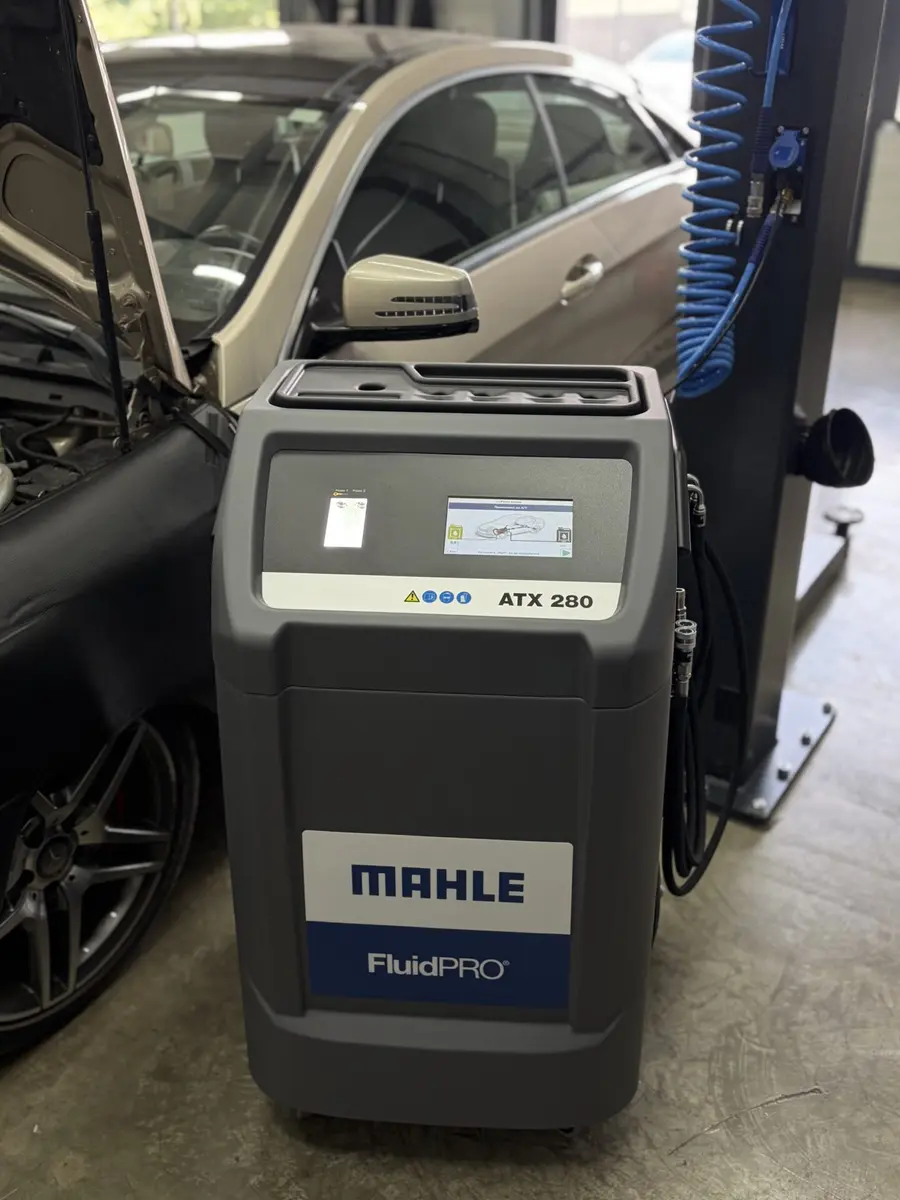
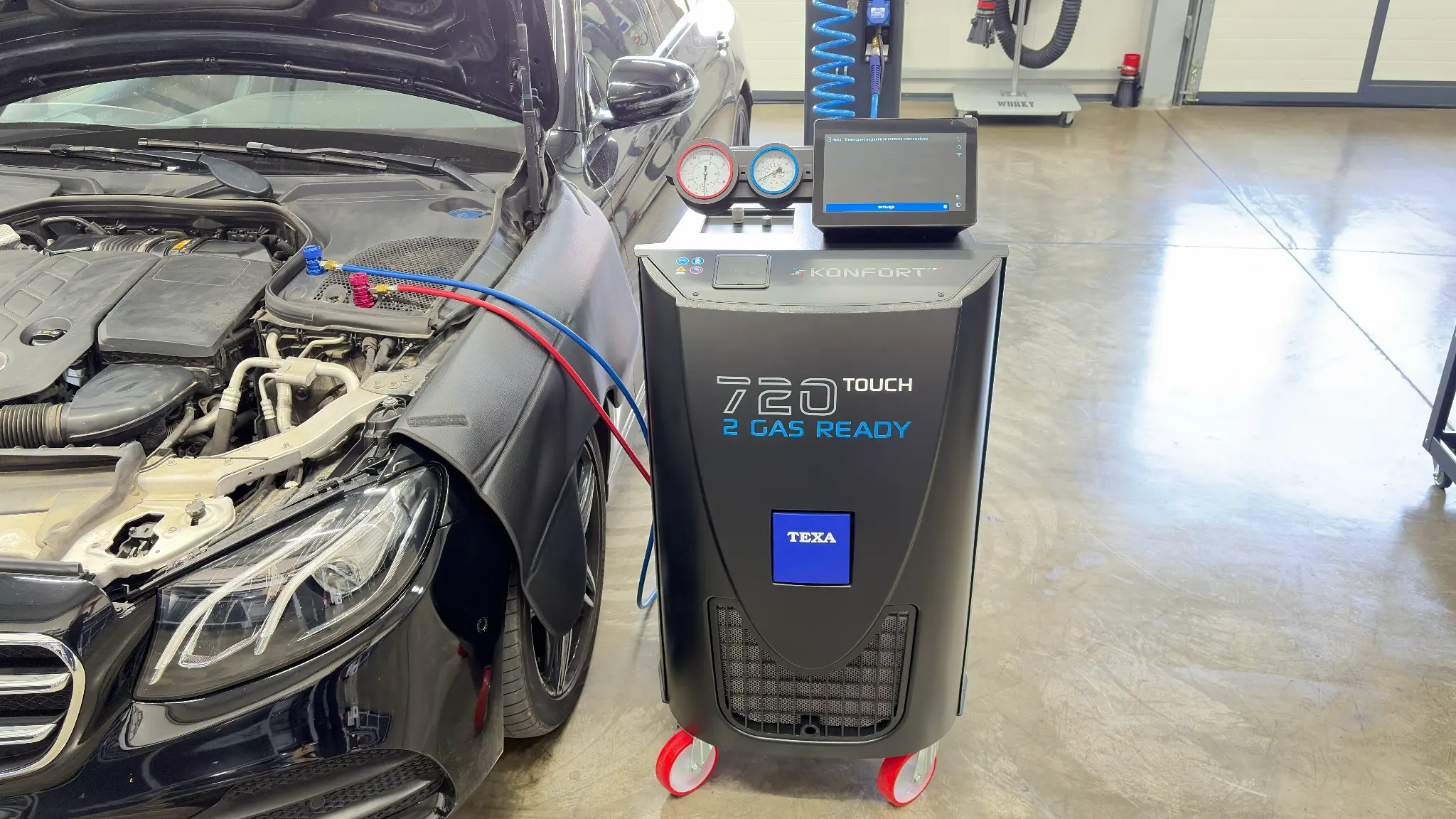
ServiceMB uses a TEXA KONFORT 720 TOUCH station configured for R1234yf. The equipment automates the main service stages and monitors the relevant quantities throughout the process.
The station can recover and recycle the refrigerant, separate the recovered compressor oil, evacuate the system and recharge the specified quantity of R1234yf. Oil and UV tracer are managed by the equipment where the service procedure requires them.
Vacuum-phase monitoring may indicate certain leaks, but it is not a substitute for dedicated leak detection when refrigerant loss is suspected. In that case, the cause must be investigated separately before the system is finally charged.
The station can record the operations performed, providing traceability of the procedure and refrigerant quantity.
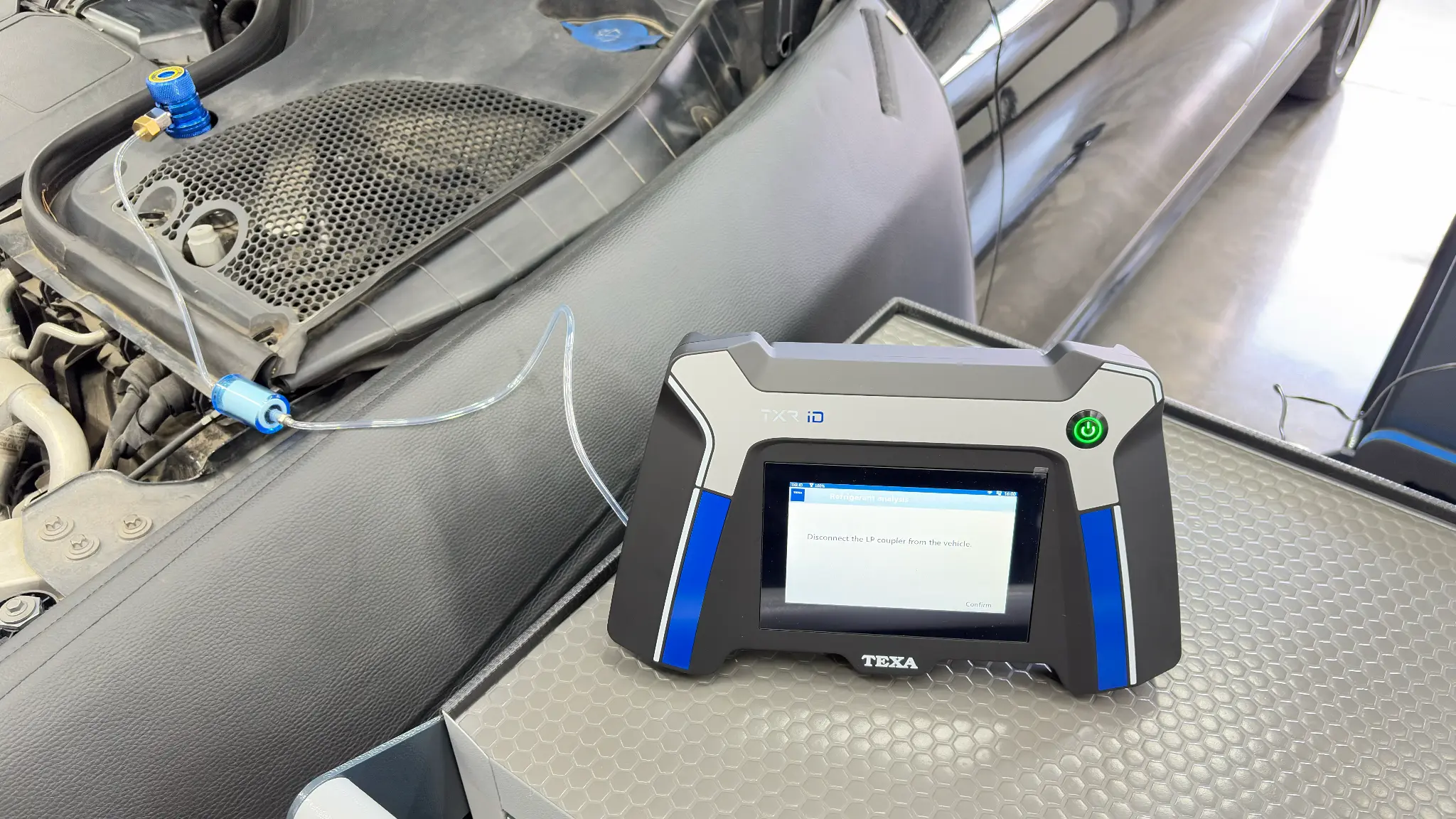
TEXA TXR ID—analysis before service
Before connecting the service station, we use the TEXA TXR ID portable refrigerant analyser. It identifies whether the vehicle contains R134a or R1234yf and checks the purity of the refrigerant.
If the refrigerant is incorrect or contaminated, it is not admitted into the station's normal service circuit. This initial check helps prevent mixing of refrigerants and protects both the vehicle system and the service equipment from contamination.
Why a controlled procedure matters
An air-conditioning system must operate with the specified refrigerant quantity and suitable compressor oil. An incorrect quantity can reduce cooling performance and affect compressor operation. For that reason, ServiceMB does not simply ‘top up’ the system; the work is based on recovery, measurement, evacuation and charging to the technical data for the vehicle.
Principal stages
- Identification and purity check of the refrigerant.
- Recovery and recycling of R1234yf.
- Separation and measurement of recovered oil.
- System evacuation and monitoring of the vacuum phase.
- Metering of oil and UV tracer where required.
- Charging the exact specified quantity of R1234yf.
- Saving a service report.